
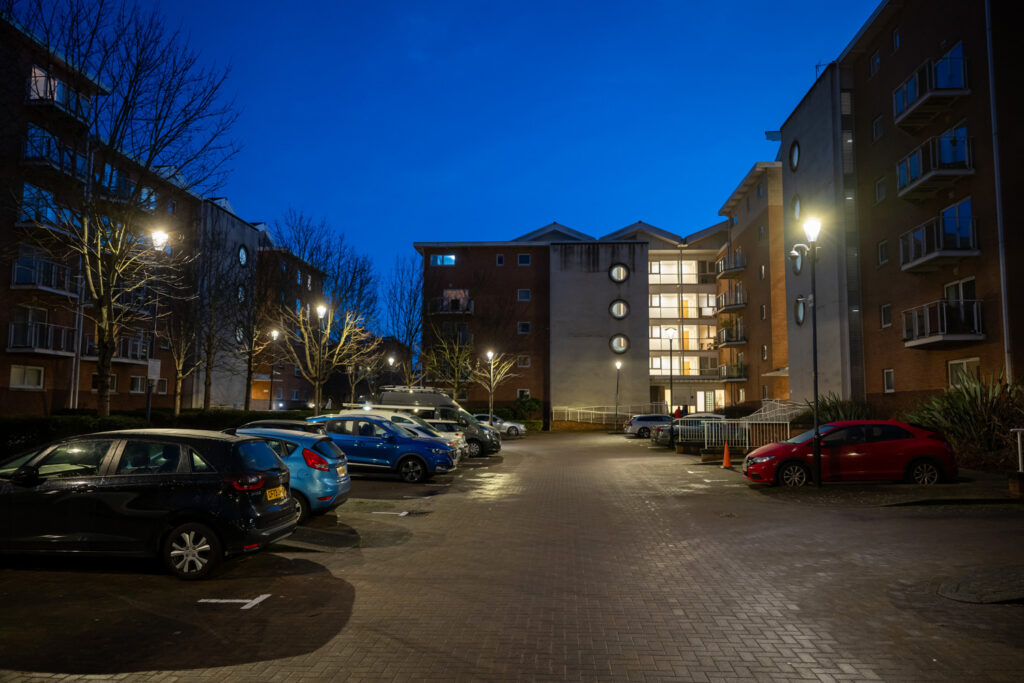
Car Park Lighting
Designing safe, efficient and well-balanced outdoor car park lighting
Car park lighting is often treated as a straightforward application. In reality, it has to do more than simply illuminate a space.
It needs to work for drivers, pedestrians and security systems at the same time. It needs to feel safe without being over-lit. And it needs to perform consistently across large areas, often in environments where surrounding properties, wildlife or public spaces are sensitive to light spill.
In outdoor car parks especially, good lighting is about balance. Not just how much light is provided, but how it is distributed, controlled and experienced.
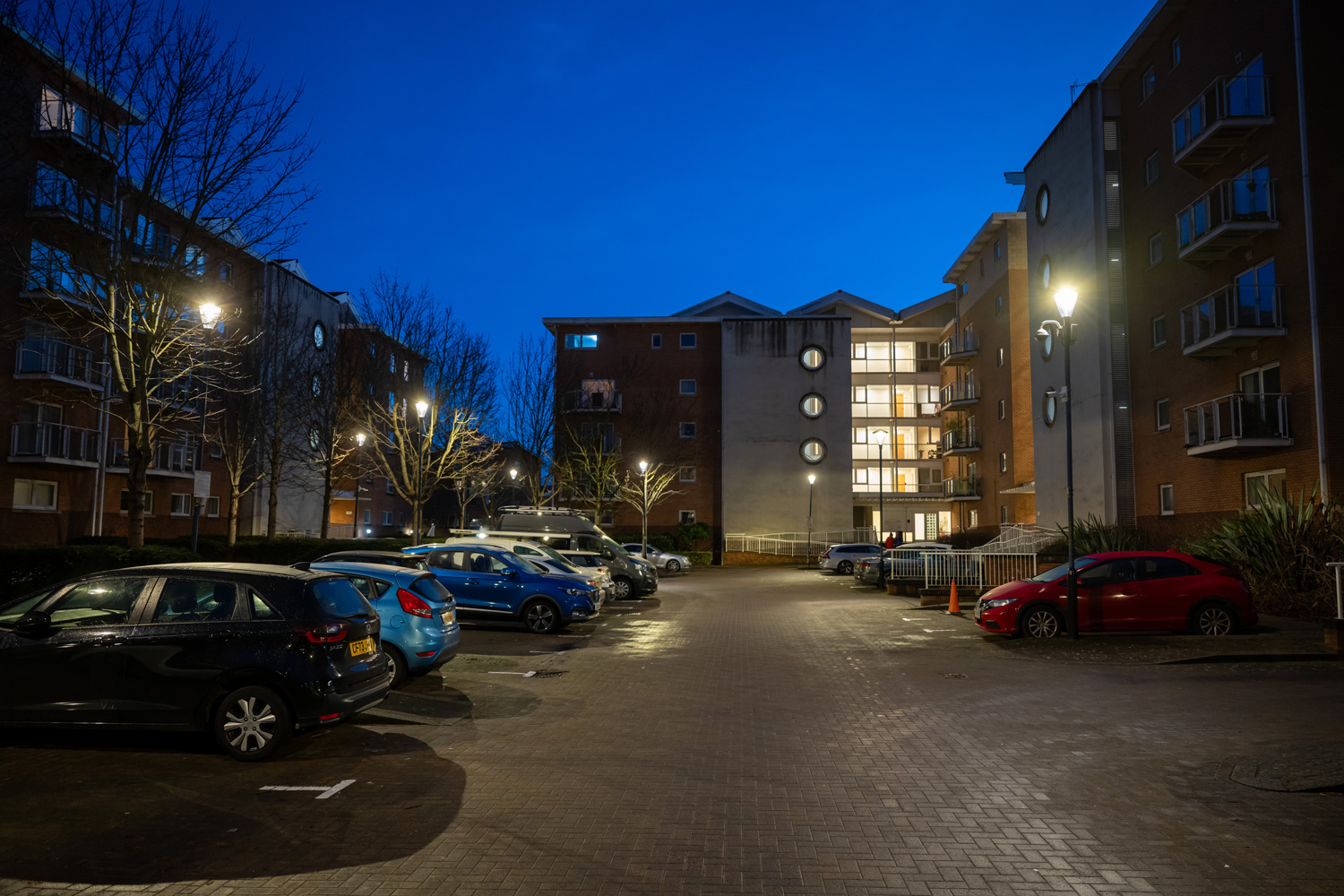
Start with the application
The first step is understanding how the car park is used.
A small residential car park has different requirements to a busy retail or transport hub. Traffic levels, layout and surrounding context all influence the lighting approach.
Questions at this stage are simple, but important.
Is the space used occasionally or continuously? Are vehicles the primary focus, or is pedestrian movement equally important? Is the site located near residential properties or in an open commercial setting? Are there areas such as entrances, payment points or walkways that require greater visual clarity?
Being clear about the task helps define the right lighting level, column layout and control strategy from the outset.
Light levels and visibility
Lighting levels for outdoor car parks are typically guided by BS 5489-1, with recommendations based on usage.
Lower traffic areas may require around 5 lux, increasing to 10 or 20 lux where traffic volumes and activity are higher. Uniformity is also a key requirement, with a minimum ratio typically around 0.25.
In practice, light level is only one part of the picture.
Increasing light levels can improve visibility in some situations, but it is not the only factor. Uniformity, glare control and light distribution often have an equal or greater influence on how a space is experienced.
A well-balanced scheme avoids bright spots and dark patches, providing consistent illumination that allows users to move confidently through the space.
Designing for people, not just compliance
Car parks are shared environments
Drivers need to navigate safely at low speeds, identify routes and avoid obstacles. Pedestrians need to feel comfortable walking through the space, often carrying bags or moving between vehicles. CCTV systems rely on certain lighting conditions to perform effectively.
Perception plays a significant role
Research has shown that perceived safety is influenced not only by light level, but also by uniformity and the spectral quality of the light. An evenly lit space often feels safer than one with higher light levels but poor distribution.
Vertical illumination also becomes important in certain areas, particularly around entrances and walkways, where facial recognition and awareness of other users contribute to a sense of security.
Glare and spill light
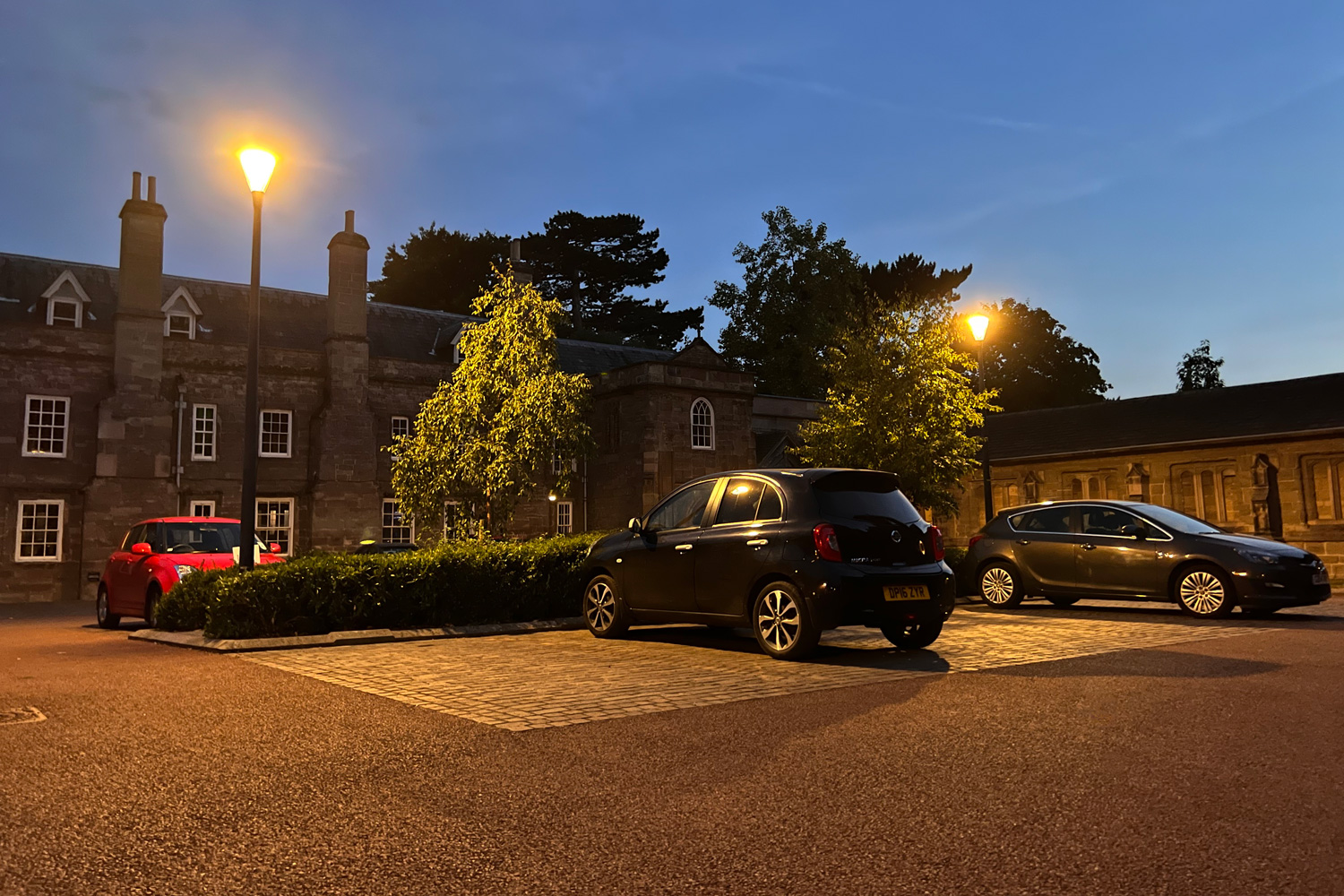
One of the most common issues in car park lighting is poor control of light.
Unshielded or poorly aimed luminaires can create glare for drivers and pedestrians, while also allowing light to spill into surrounding areas. In residential settings, this can lead to complaints and planning challenges.
Good optical control helps direct light only where it is needed.
This includes selecting appropriate optics, maintaining low or zero tilt angles where possible, and using shielding to reduce obtrusive light. Warmer colour temperatures, typically 3000K or below, can also help reduce environmental impact, particularly in sensitive locations or conservation areas.
The aim is to create a space that feels clear and comfortable without drawing unnecessary attention to the lighting itself.
Controls and real-world use
Car parks rarely operate at full capacity throughout the night.
Lighting that remains at full output at all times results in unnecessary energy use. Introducing simple control strategies allows lighting to respond more closely to how the space is actually used.
This might include dimmed levels with increased output during busier periods, or presence-based activation in quieter areas.
TRT’s Lumi-LinQ system supports this approach. Luminaires can operate wirelessly in groups, responding to movement and adjusting light levels accordingly. This allows energy use to be reduced when areas are unoccupied, while still maintaining appropriate visibility when needed.
The result is a more efficient scheme that continues to support safety and usability.
Choosing the right luminaire
Different areas within a car park often require different lighting approaches.
Column-mounted lighting will typically form the primary illumination across the main parking area. Post-top lanterns such as Chalis, Circa and Luz are well suited to general coverage and pedestrian routes, while lower use areas may benefit from more compact solutions such as Optio Micro. Larger or higher activity sites can be supported using Aspect Gen2 or Aspect Floodlight where greater coverage is required.
Supporting lighting around the edge of the site is just as important. Building perimeters, entrances and transition zones often benefit from wall-mounted luminaires, helping to define boundaries and improve visibility close to structures. Products such as Facet Zero can be used in these areas to provide controlled, low-glare illumination with zero upward light.
The key is selecting luminaires that work together to deliver consistent performance across the site, rather than relying on a single product type.
Working with existing infrastructure
In many projects, car park lighting is not designed from a blank canvas.
Existing columns, cabling routes and electrical infrastructure often need to be retained, particularly where budgets are limited or disruption must be minimised. This can place constraints on column positions, mounting heights and spacing, all of which influence the final lighting performance.
In these situations, a full redesign is not always practical.
Instead, the focus shifts to making the best use of what is already in place.
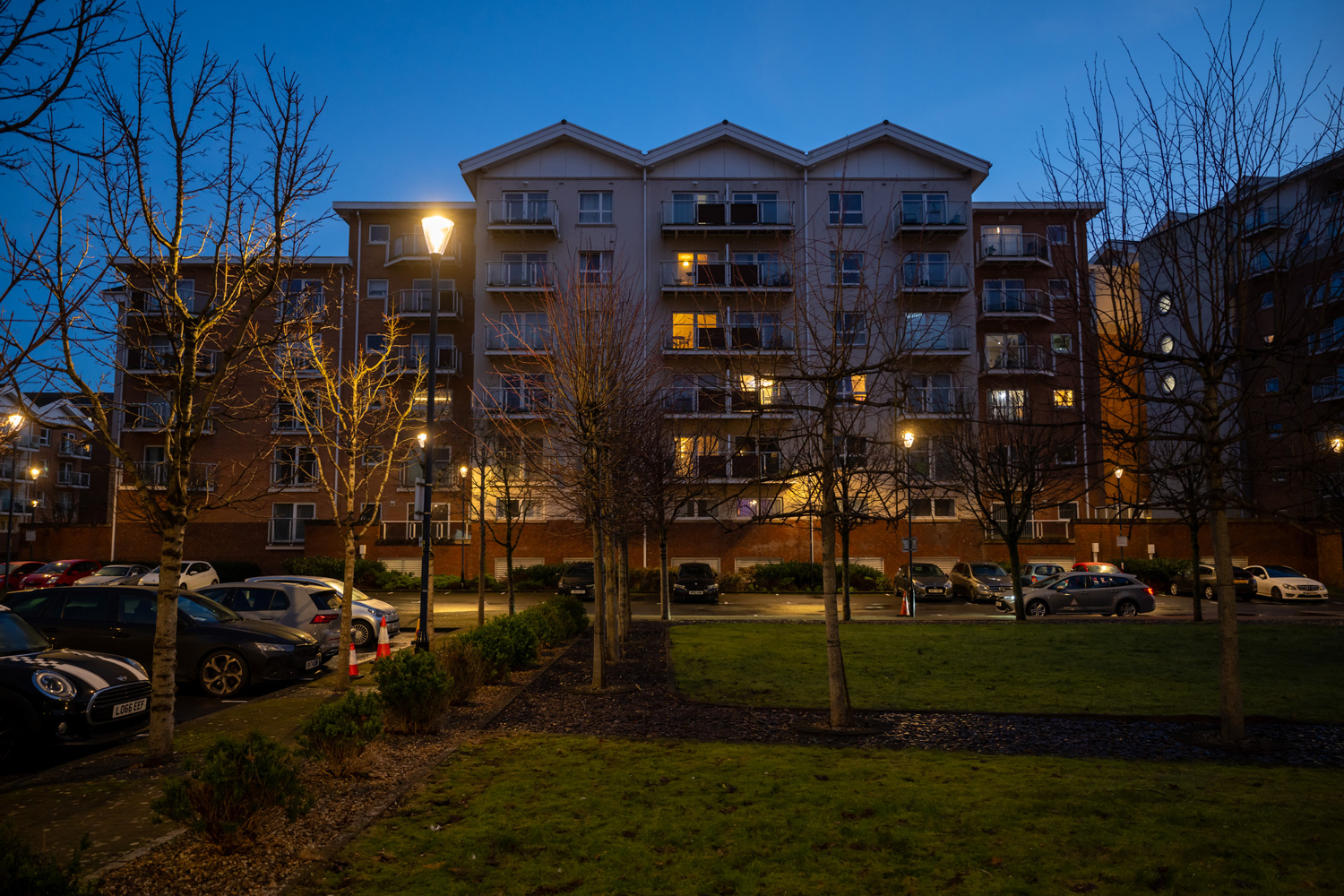
For an example of this approach in practice, read more about the Century Wharf, Cardiff project, where an existing car park was relit while retaining the original columns and cabling.
Lighting that works as a system
Car park lighting is about creating a balanced environment that supports movement, visibility and comfort.
When light levels, uniformity, control and optical performance are considered together, the result is a scheme that feels natural to use and efficient to operate.
By focusing on how the space is used, rather than simply how it is lit, car park lighting can deliver both practical performance and long-term sustainability.
For early-stage discussions or project-specific advice, contact the TRT Lighting design team at info@trtlighting.co.uk or call +44 (0)1527 521162.