
Tunnel Lighting
Designing for safety, visibility and whole-life performance
Tunnel lighting is unlike almost any other exterior lighting application.
Drivers enter at speed, visual conditions can change within seconds, and maintenance access is often limited, expensive and disruptive. The result is an environment where lighting must do far more than simply illuminate the road ahead.
Whether delivering a new tunnel scheme or upgrading an existing asset, tunnel lighting requires careful consideration of safety, driver comfort, energy efficiency and long-term maintenance. Get the balance right and the lighting becomes almost invisible to the road user. Get it wrong and the consequences can affect safety, operational costs and asset performance for decades.

Understanding the driver’s journey
One of the key challenges in tunnel lighting is helping drivers adapt to rapidly changing light conditions.
During daylight hours, the luminance outside the tunnel entrance can be significantly higher than within the tunnel itself. Without appropriate lighting in the threshold and transition zones, drivers can experience what is commonly known as the “black hole effect”, where the tunnel interior appears as a dark opening with limited visibility of potential hazards.
To overcome this, tunnel lighting should be designed to support visual adaptation. With lighting levels gradually reducing as drivers move through the tunnel. This creates a safer and more comfortable visual transition, avoiding unnecessary energy consumption deeper within the tunnel.
For this reason, tunnel lighting schemes are typically divided into five distinct zones:
- Access Zone
- Threshold Zone
- Transition Zone
- Interior Zone
- Exit Zone
Each zone requires different lighting levels and control strategies to support safe driving conditions. The highest lighting levels are required near the tunnel entrance, gradually reducing as drivers adapt to the lower ambient light levels within the tunnel itself.
The objectives are simple: maintain visibility, support driver confidence and create a safe visual environment throughout the journey.
Designing for more than compliance
Tunnel lighting standards such as BS 5489-2 provide an essential framework for safe design, defining criteria for lighting levels, uniformity, glare control and visual adaptation throughout the various tunnel zones.
However, compliance should be viewed as a starting point rather than the final objective.
Every tunnel presents different operational requirements. Traffic speeds, tunnel length, geometry, maintenance access and daylight conditions all influence the final design solution. A successful tunnel lighting scheme must balance these practical considerations alongside:
- Visual comfort
- Uniformity of illumination
- Glare control
- Colour rendering
- Driver confidence
- Energy efficiency
Drivers rely on consistent visual information to judge distance, identify hazards and react appropriately. Harsh transitions, excessive glare or inconsistent lighting can all negatively impact the driving experience, even where lighting levels technically meet the required standard.
The objective is not simply to provide light. It is to create a visual environment that feels safe, comfortable and predictable throughout the tunnel journey while supporting the long-term operational needs of the asset.
Why maintenance matters from day one
Unlike many exterior lighting applications, tunnel lighting is rarely easy to access.
Maintenance activities often require lane closures, traffic management measures and carefully planned access windows. In busy transport networks, even routine maintenance can carry significant operational costs.
For asset owners and operators, this means maintenance considerations should influence design decisions from the outset.
Questions worth asking include:
- How easy is the luminaire to access and service?
- Can components be replaced independently?
- What is the expected operational life?
- How quickly can maintenance be completed during closure periods?
- Can faults be identified remotely?
Designing for maintainability can reduce disruption, lower operating costs and improve long-term asset performance.

New installations or retrofit?
While major infrastructure projects occasionally require completely new tunnel lighting systems, many tunnel operators face a different challenge.
The luminaire structure remains sound. Often the issue is that the lighting technology has become inefficient, difficult to maintain or no longer aligns with current operational requirements.
In these situations, retrofit solutions can offer a practical alternative to full replacement.
By retaining existing infrastructure and replacing only the optical and control components, operators can benefit from:
- Reduced material waste
- Lower embodied carbon
- Shorter installation programmes
- Reduced disruption to tunnel users
- Improved energy performance
- Lower capital expenditure
Retrofit projects also support circular economy objectives by extending the life of existing assets rather than replacing them unnecessarily.
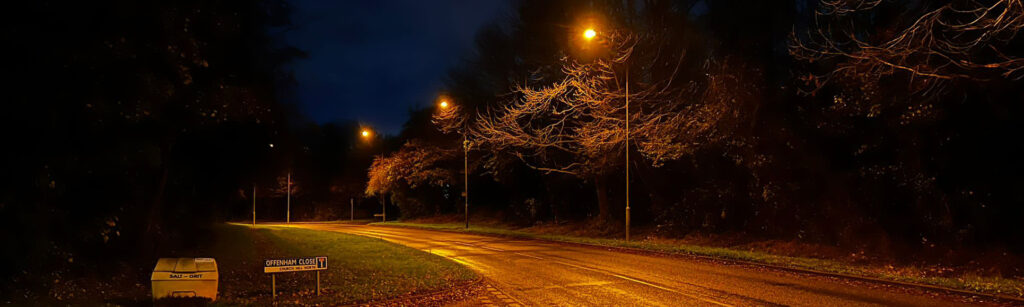
A disused railway tunnel repurposed as a cycle route presented significant ecological challenges. The tunnel serves as a roosting site for protected bats such as the Lesser Horseshoe bat, meaning illumination was permitted only during daylight hours. TRT developed a reverse-switching photocell system and shielded optics to maintain daytime visibility while ensuring the tunnel remained unlit at night. The result balanced safety and ecological protection through innovation and restraint.

In Practice: Frenchgate Tunnel
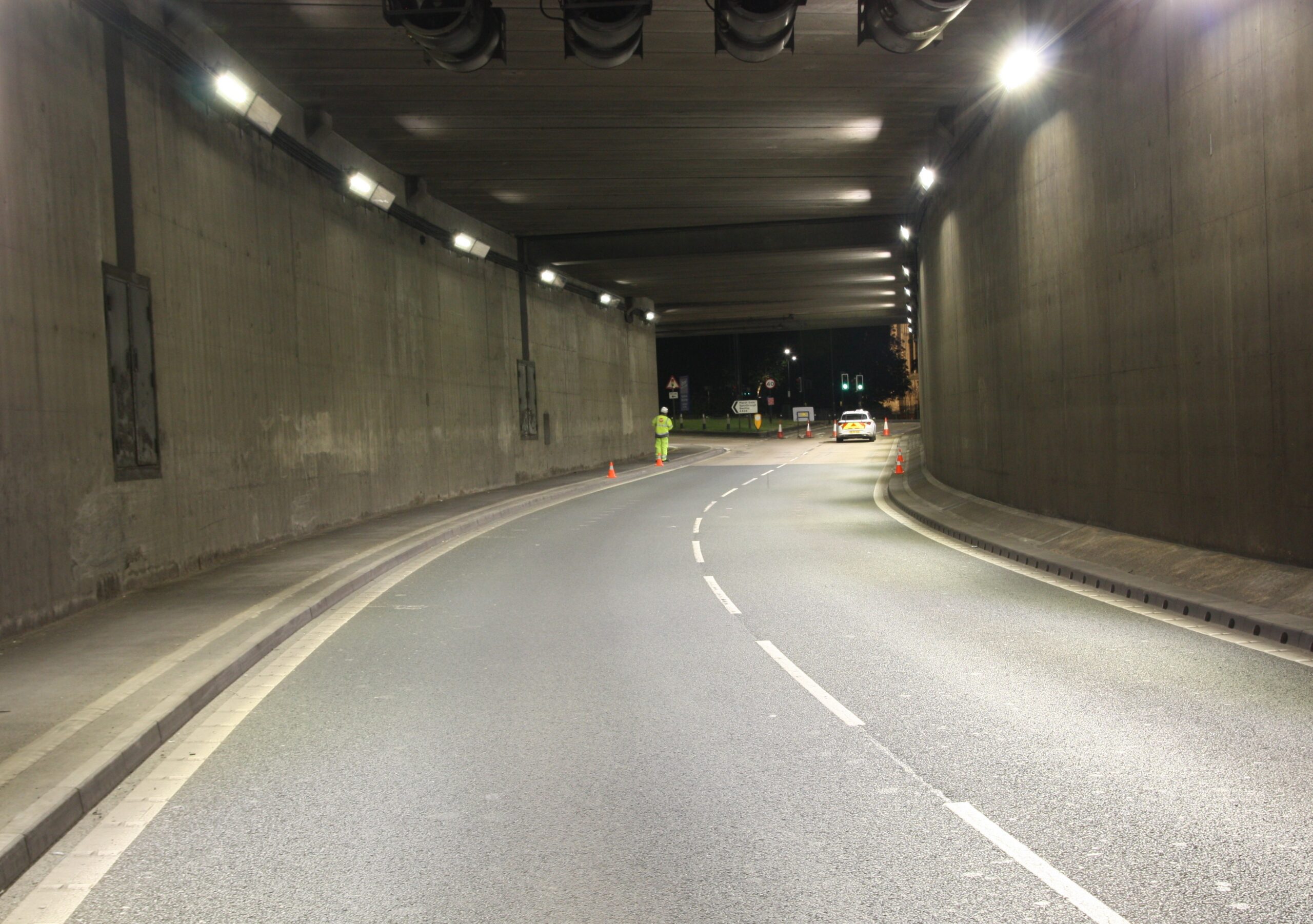
At Frenchgate Tunnel in Doncaster, TRT Lighting supplied a bespoke LED retrofit tray solution that enabled the existing tunnel luminaires to remain in service while upgrading the installation to modern LED technology.
The project delivered significant reductions in energy consumption while avoiding the cost, waste and disruption associated with a complete luminaire replacement programme.
In Practice: Holmesdale Tunnel
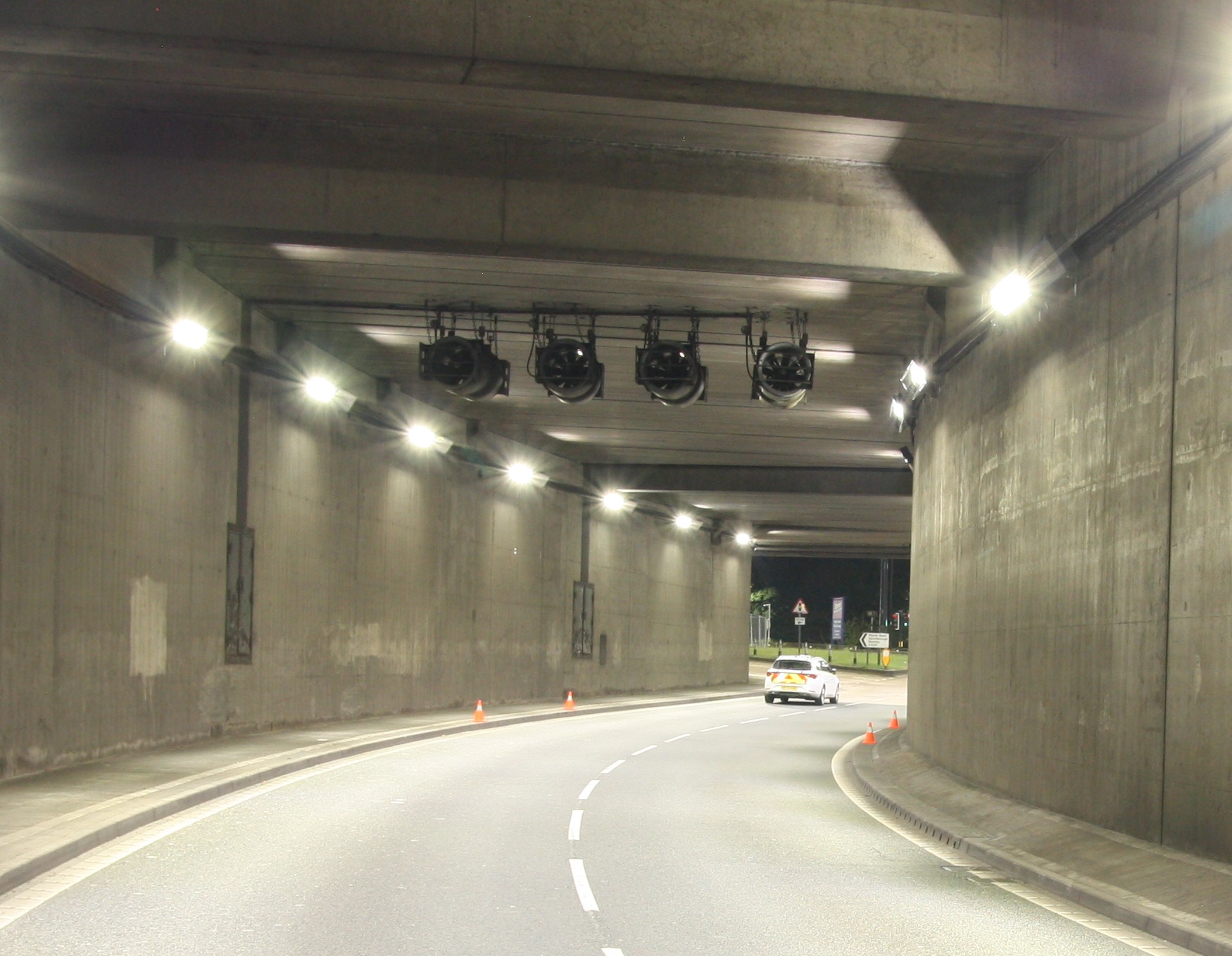
Holmesdale Tunnel provides another example of how retrofit technology can modernise tunnel lighting infrastructure. By retaining the existing luminaires and upgrading the internal components, the scheme improved efficiency and performance while making best use of existing assets.
These projects demonstrate that tunnel lighting upgrades do not always require complete replacement to achieve meaningful operational and environmental benefits.
Smarter tunnel lighting
Modern tunnel lighting is about far more than the luminaire itself.
Control systems play a vital role in balancing safety and energy efficiency by allowing lighting levels to respond to changing external conditions.
Unlike many exterior lighting applications, tunnel lighting often responds directly to changing daylight conditions. As external brightness levels increase or decrease, lighting levels within the threshold and transition zones can be adjusted accordingly.
This approach helps maintain safe visual adaptation for drivers while avoiding unnecessary energy use during periods of lower ambient light.
Modern control systems also provide remote monitoring, fault reporting and performance data, allowing operators to manage tunnel assets more proactively and reduce reactive maintenance visits.
Benefits can include:
- Adaptive dimming
- Energy optimisation
- Reduced operating costs
- Improved asset monitoring
- Faster fault identification
- Enhanced maintenance planning
By matching lighting output to actual requirements, tunnel operators can significantly reduce energy consumption without compromising safety.
R-Range: Designed around tunnel challenges
Tunnel environments place unique demands on lighting equipment.
Moisture, vibration, restricted maintenance access and strict fire safety requirements all influence luminaire design. Unlike conventional road lighting, replacing a failed component may require lane closures, traffic management and carefully planned maintenance windows.
TRT Lighting’s R-Range has been developed specifically to address these challenges.
The luminaire combines robust construction with a maintenance-focused design philosophy, helping operators reduce whole-life costs while maintaining reliable performance.
Key features include:
- S12-compliant design
- 316L stainless steel construction
- IP66 ingress protection
- Modular optical assembly
- Tool-less maintenance access
- DALI dimming capability
- Compatibility with Lumi-LinQ lighting controls
The modular design allows optical and driver components to be accessed and replaced independently, helping minimise maintenance time in environments where access is often restricted.

In Practice: Silvertown Tunnel
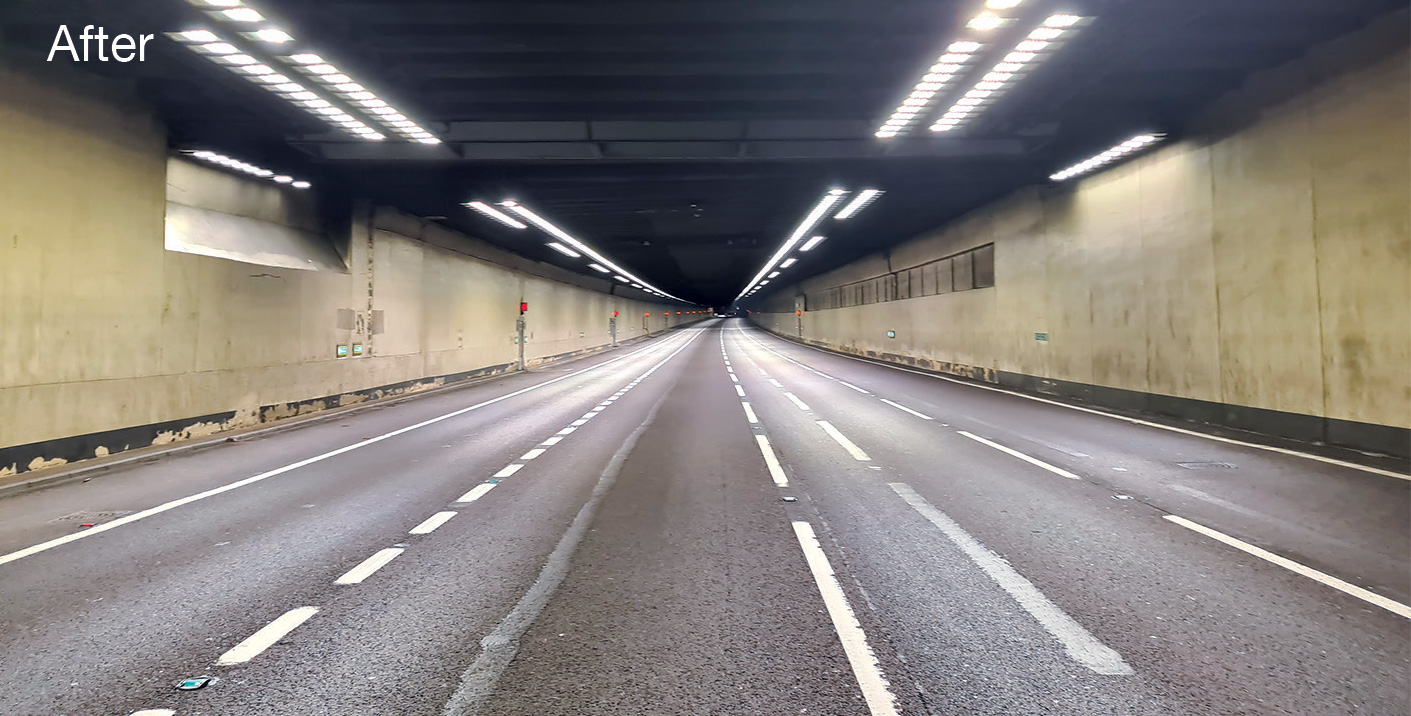
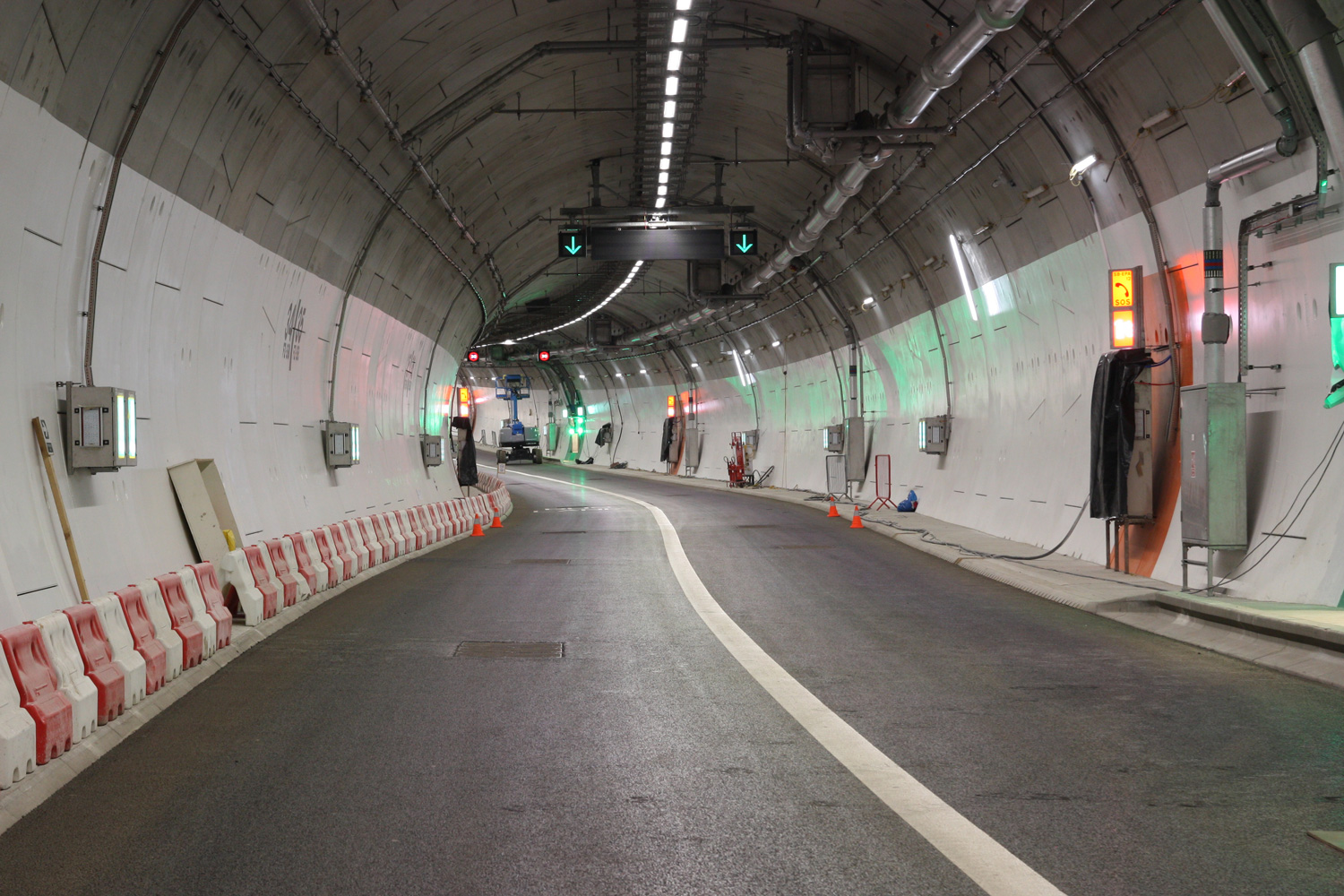
The recently completed Silvertown Tunnel project highlights the scale and complexity of modern tunnel infrastructure. Schemes of this nature place significant demands on lighting
systems, requiring robust construction, high reliability and effective maintenance strategies to support long-term operation.
Tunnel lighting is an asset management decision
Tunnel lighting projects are often driven by energy savings, but the most successful schemes deliver much more than lower electricity bills.
They improve safety. They reduce maintenance interventions. They minimise disruption to road users. And increasingly, they support sustainability objectives through longer asset life and retrofit-led approaches.
Whether upgrading an existing installation or delivering a new tunnel scheme, taking a whole-life approach to tunnel lighting helps ensure the infrastructure continues to perform safely and efficiently for years to come.
Further Reading
- Download the TRT Road Tunnel Lighting Brochure
For advice on tunnel lighting design, retrofit solutions or new tunnel projects, contact the TRT Lighting design team at info@trtlighting.co.uk or call +44 (0)1527 521162.