
The Mumbles, Swansea
Project Details
The Mumbles is now brighter, safer, and more sustainable thanks to a new lighting installation designed to withstand the harsh coastal environment while preserving the area’s natural beauty.
Via bollards were selected to resolve the unique challenges that coastal locations pose including corrosion, wind exposure and durability in a heavily trafficked area.
Applications
- Amenity Projects
Products Used
Project Gallery
Background
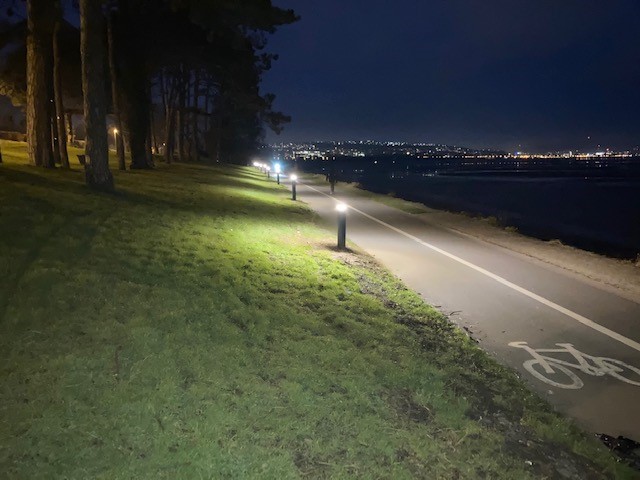
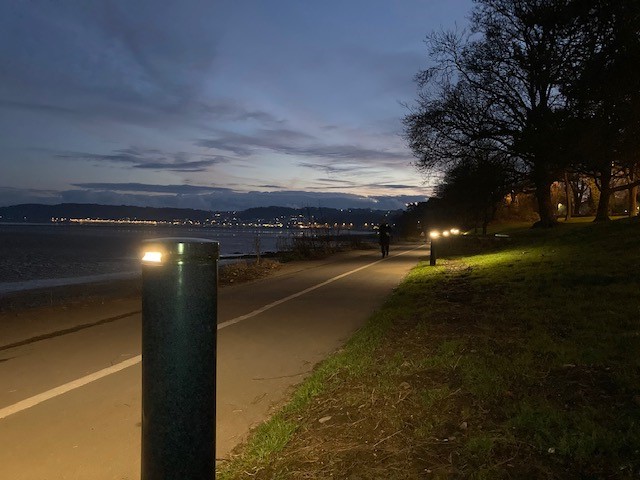
The City & County of Swansea Council has recently implemented a new lighting system along the Swansea Bay promenade, a stretch running just over 3 miles from the Mumbles to St Helens sports ground. This area is heavily trafficked by thousands of individuals each week, including walkers, parents with pushchairs, pet owners, and cyclists.
The primary challenge for lighting installations in coastal locations like this promenade includes the degradation of paint finishes, potential corrosion to lantern bodies due to salty water, water ingress caused by high wind speeds, and the corrosion of fixings.
Solution
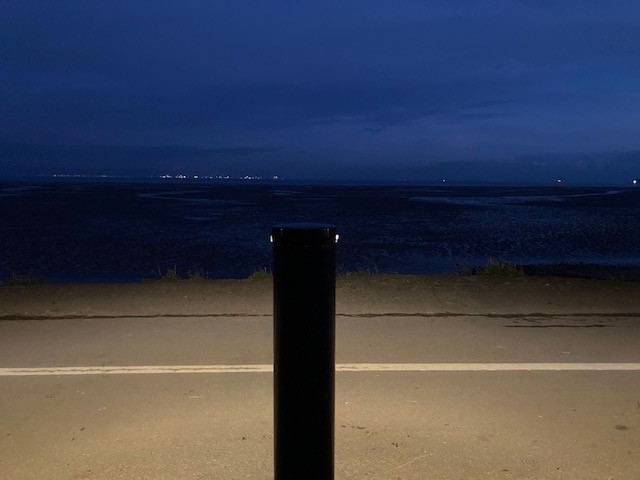
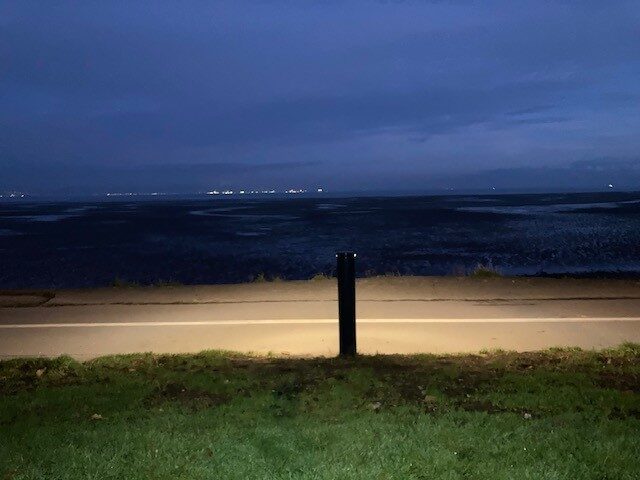
To address these challenges, the Council chose Via bollards, with a warm light output of 3000K for the lighting installation. These bollards are IK10 and IP66 rated, designed to withstand coastal environmental stresses.
These are constructed using LM6 grade aluminium for castings with pre-treatment and surface preparation before powder coat painting. Enhanced protection, provided by TRT, includes double paint coating thickness of over 150um, ensuring a lifespan of over 20 years in high salinity coastal areas. City & County of Swansea Council opted for a semi-gloss duchess blue finish, inkeeping with the colour scheme of the existing street furniture along the bay.
Stainless steel cast inserts avoid direct contact between stainless steel fixings and raw aluminium parts, preventing bi-metallic corrosion. The design of the Via includes a flush-fitting access door with anti tamper security fixings and an inner rebate for enhanced vandalism resistance. TRT’s PowerSet and Optiset features are integrated,
allowing for manual adjustment of output and distribution through a visible wattage indication device on the gear tray.
The bollards are spaced approximately 14 metres apart and root mounted into the ground.
Discrete solid silicone shields were retrofitted where necessary, the flush fitting of these shields ensures safety for pedestrians and cyclists by preventing any protruding elements.
Outcome
The improved lighting is expected to enhance safety and encourage more people to enjoy the seaside area for longer periods, contributing to the vibrancy and appeal of Swansea Bay.
The project, consisting of over 300 Vias, was completed in phases which started in 2021 and was fully implemented in Summer 2024.
The new lighting system not only meets functional requirements but also harmonizes aesthetically with existing blue street furniture and lampposts. This project represents a significant upgrade to the promenade, offering long-term durability and energy efficiency, with the bollards’ annual operating cost estimated at just £15 each. The successful completion of this project demonstrates a sustainable and aesthetically pleasing solution to coastal lighting challenges.
The installation of the new LED bollards along Swansea Bay promenade has made a significant difference to this well-used public space. The improved lighting has enhanced safety and security, ensuring that walkers, joggers, cyclists, and families feel comfortable using the promenade at all times of the day and evening.
We are continuing to receive lots of praise from the public for the installation, who recognise the positive enhancements the new lighting has provided along this beautiful part of Swansea.
TRT Lighting has also done an excellent job in matching the new lighting bollards to our existing street furniture along the route, further complementing the beachfront environment.
Andrew Stevens Cabinet Member for Environment & Infrastructure at Swansea Council