
Shute Shelve Tunnel, Somerset
Project Details
The 165-metre-long Shute Shelve Tunnel in Somerset needed a lighting design that provided daytime illumination while considering the nocturnal habits of bats.
Applications
- Tunnel Projects
- Amenity Projects
Products Used
Project Gallery
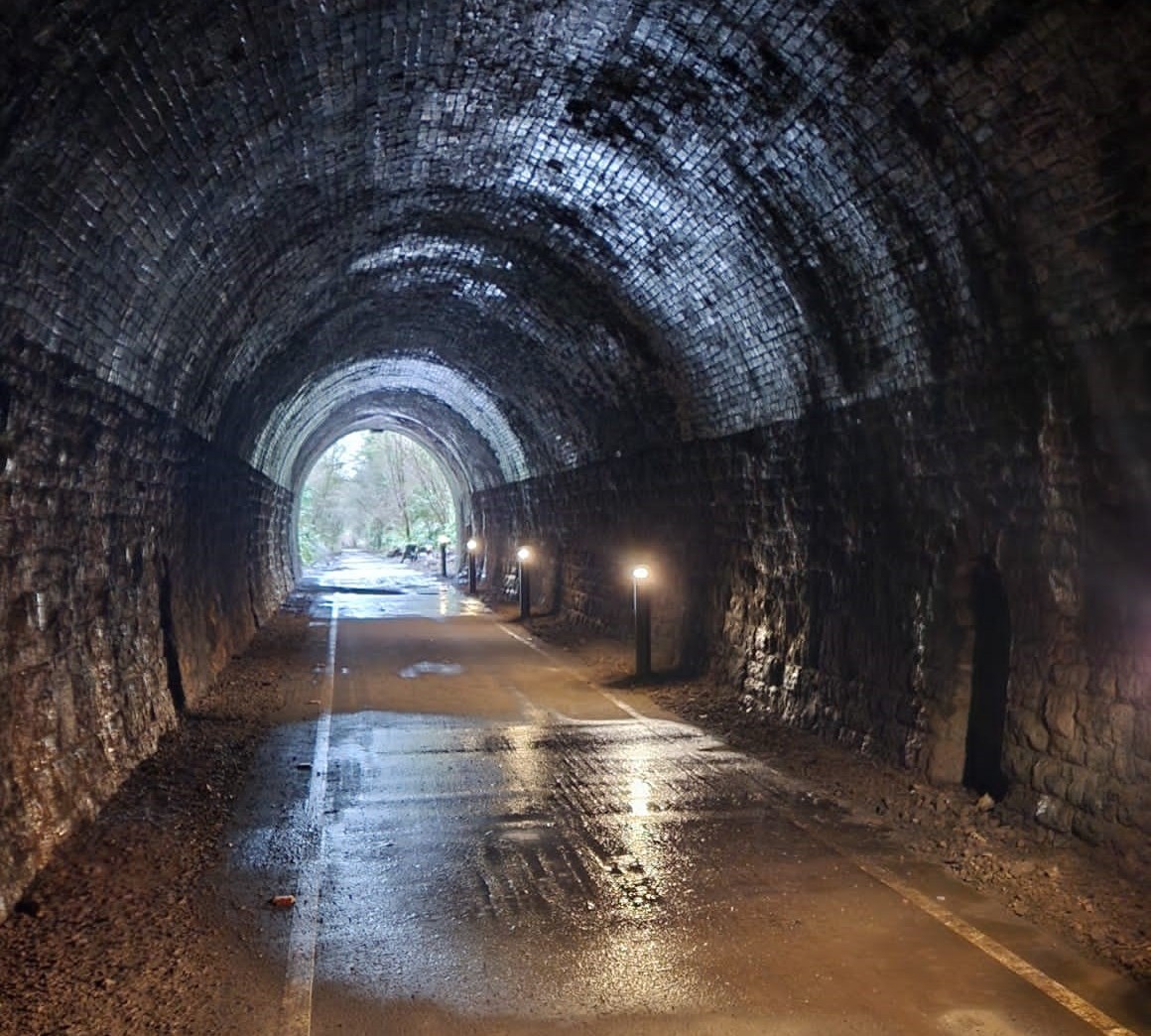
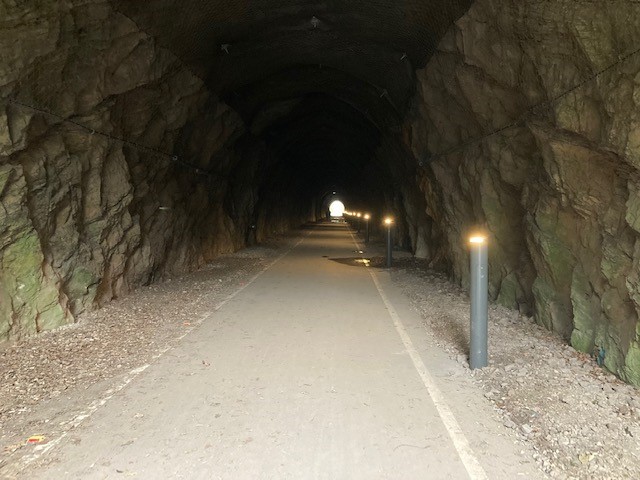
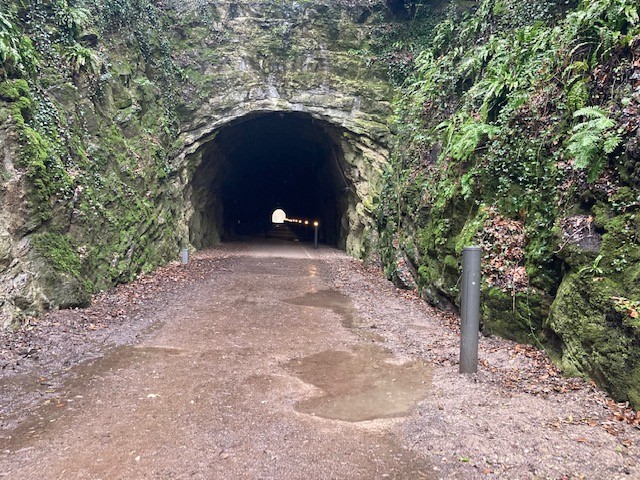
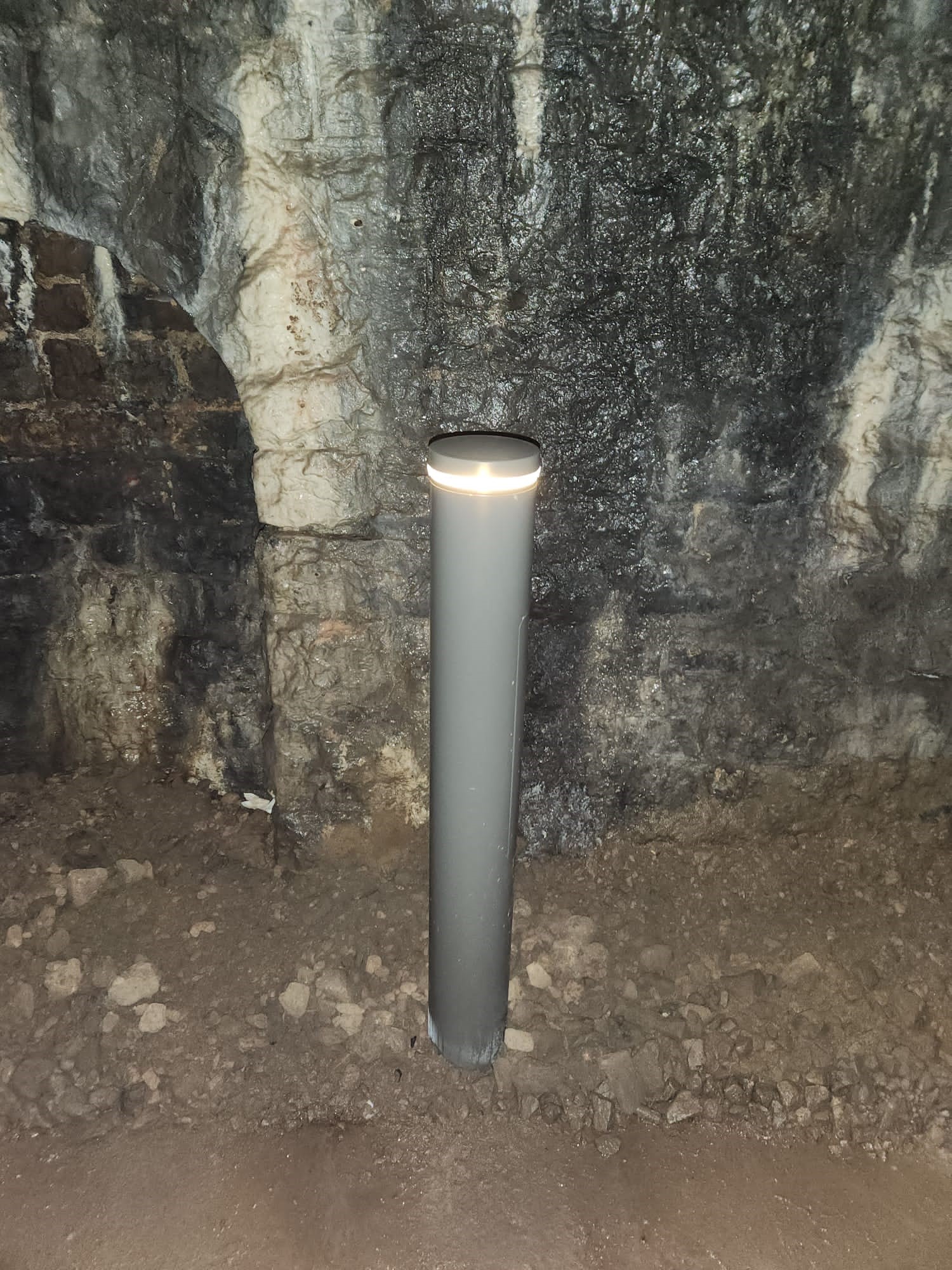
Illuminating the 165m-long Shute Shelve Tunnel in Somerset so as to not disturb its delicate populations of bats and spiders meant careful planning, collaboration (including with ecologists) and specification.
Overview
Until the late 1960s, the Cheddar Valley Line, a branch of the Great Western Railway, ran between Witham Junction and Yatton, at the time this was known as the ‘Strawberry Line’. This 10-mile disused railway line has now become a popular route for pedestrians, cyclists and wheelchair/mobility scooter users. The pathway winds through the Mendip Hills and at King’s Wood, the mouth of the tunnel begins to enter the hillside, housing insects and used by a variety of bat species for foraging.
When Bristol Water unveiled its ‘Southern Resilience Scheme’, which was a project to install 30km of pipeline underground, it included accessing Shute Shelve tunnel.
As part of the project’s planning conditions, an upgrade was required to update the existing lighting system and improve its functionality.
Following feedback from users and residents, North Somerset Council’s Parks & Open Spaces Team requested that the tunnel’s path was illuminated during the day. In keeping with the rest of the Strawberry Line route and other neighbouring rural areas, which remain unlit, lighting was not to be activated during the night ensuring visiting bats were not disturbed.
Solution
TRT were tasked with producing a highly efficient LED solution for this new installation, while at the same time giving key consideration to the protected bat species that use the tunnel on occasion.
Initially, a site survey was conducted to assess the tunnel and understand the environment and all the mitigating factors. (All lighting schemes are individually assessed as they differ from project-to-project).
The next step was to seek advice and have discussions with ecologists, consultants and a number of other interested parties, including North Somerset Council, Centregreat (the contractors) and
SUSTRANS (the custodians of the National Cycle Network).
A lighting design was then produced based on the use of low-level lighting to minimise the amount of light pollution/trespass into the
upper tunnel canopy and lessen the intrusion to wildlife.
Our ‘Via’ bollard was deemed the perfect choice, as it is specifically designed to meet lighting guidelines for footpaths and cycle paths and is compliant to BS13201. A warm white colour temperature of 3000K was also felt to be the ideal ecologically friendly option, reducing as it did the amount of blue light being emitted.
Because of a large spacing window of more than 10m, the number of bollards required was kept to a minimum. Not only did this reduce costs and installation time but it also meant less infringement on the footprint allowing more space for the users.
The bollard’s dark grey powder-coated finish allowed it to blend in with the cut rock and weathered brick surroundings, and a root mounted solution allowed the cables to be safely routed underground rather than in conduit along the irregular limestone rock face.
Challenges
This project was unique in that Shute Shelve Tunnel was required to be illuminated during the daytime for the safety of pedestrians and cyclists whilst minimising the upward light and disruption to the roosting bats. When the tunnel is typically not used at night, the luminaires were to be turned off.
To overcome this challenge, we created a lighting scheme that reverse-switches the photocells, providing a pattern that is the opposite of what is normally required.
The main objective was of minimising upward light into the tunnel canopy, where the bats roost. Reflected light from the tunnel sides was minimised using the very discreet, switchable downward-performing Via bollard optic, with durable 180o shields fitted to obscure any back-light and redirect the light on to the pathway whilst maintaining excellent uniformity and keeping visibility at a constant level.
TRT Lighting is proud to say that, with all these complex project factors, the scheme now successfully illuminates Shute Shelve Tunnel during the daytime while protecting the wildlife and without compromising on the users’ safety.
It was a pleasure to work with Mark O’Brien (Contracts Manager) and his team for Centregreat, North Somerset, who were tasked with the installation. Valuable support was also received from Exterior Lighting Solutions (ELS) in delivering this project.
Choosing TRT Lighting for the Shute Shelve Tunnel was a wise decision. They flawlessly balanced user safety with environmental care, conducting thorough assessments and collaborating with ecology experts. Their ‘Via’ bollard choice, with warm white glow and reduced blue light, demonstrated consideration towards the bat habitat. The innovative reverse
switch photocells epitomised adaptability. Their bollards, blending seamlessly with the environment, offer perfect daytime illumination while protecting wildlife. TRT Lighting brilliantly merges user safety and nature conservation.
Mark O’Brien Contracts Manager – Centregreat