
Oakwood Park, Derby
Project Details
Sustainable lighting installed in Derby’s Oakwood Park using DarkSky International-accredited Oaken lanterns to reduce energy and carbon, support wildlife, and helping achieve net zero goals.
Applications
- Amenity Projects
Products Used
Project Gallery
Background
When local authorities plan lighting improvements, we are all very aware that they must now take into consideration sustainability, circularity, carbon footprint, and energy costs.
In essence, the conversation has changed – significantly – from what it once used to be, as this article intends to show through work we have done with Derby City Council.
Many councils – most in fact – now have ambitious net zero targets to be working towards, with their lighting a key consideration. Energy usage and any savings that can be made on energy bills is a further important consideration.
Furthermore, the spread (and popularity) of metrics and tools such as TM66 are increasingly enabling all of us – manufacturers, designers, specifiers, and councils – to demonstrate, to evidence, our circular economy performance and credentials.
TM66, to recap, categorises circular economy assessment into five areas, each having a maximum assessment score of 4.0, as follows:
- Product design – which looks at component use, upgradeability, replaceability and so on.
- Manufacturing – or the amount of embodied carbon generated during manufacturing process.
- Material – the amount of embodied carbon within the product’s materials.
- Eco system – the amount of embodied carbon generated sourcing the materials.
- Overall performance.
Overview
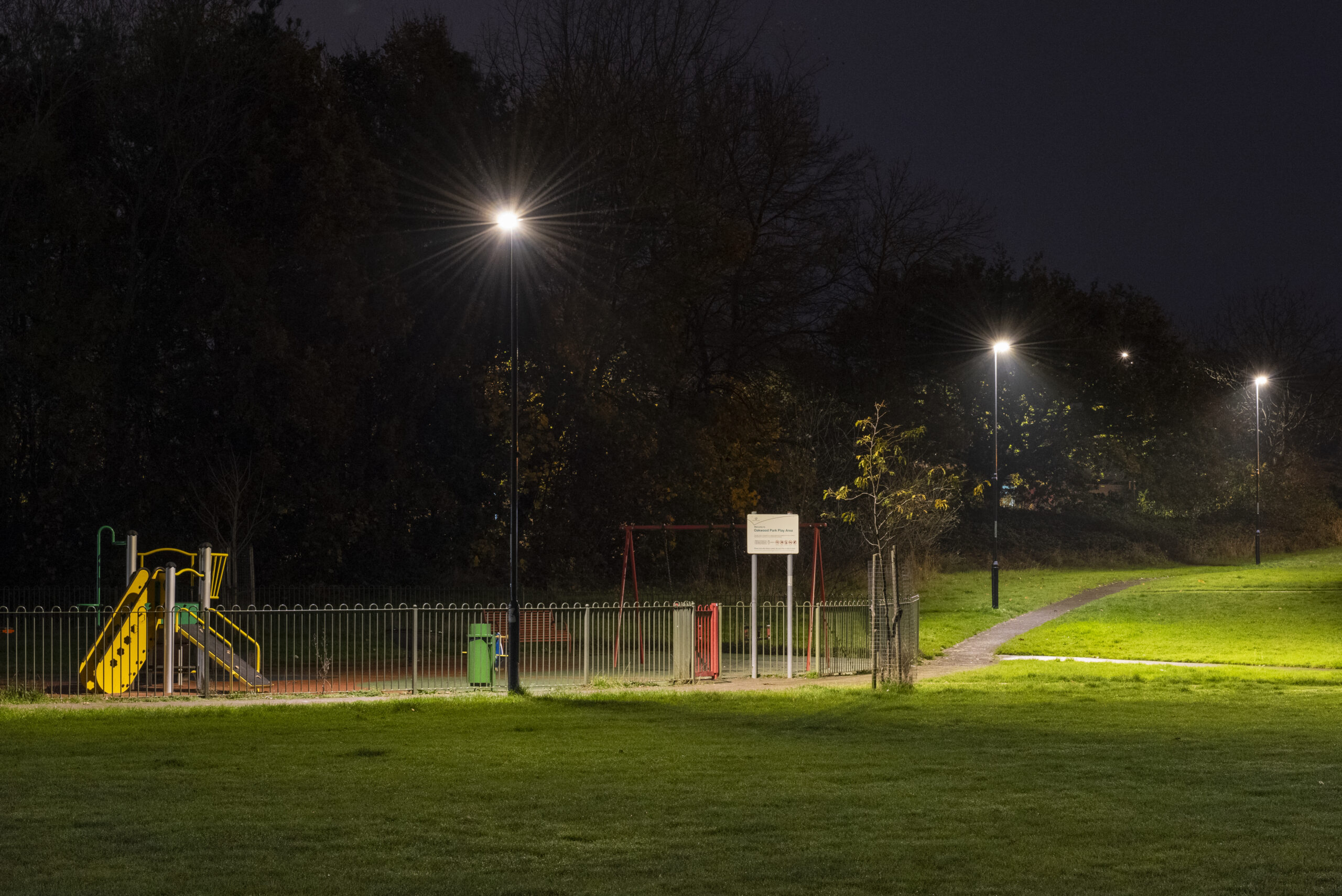
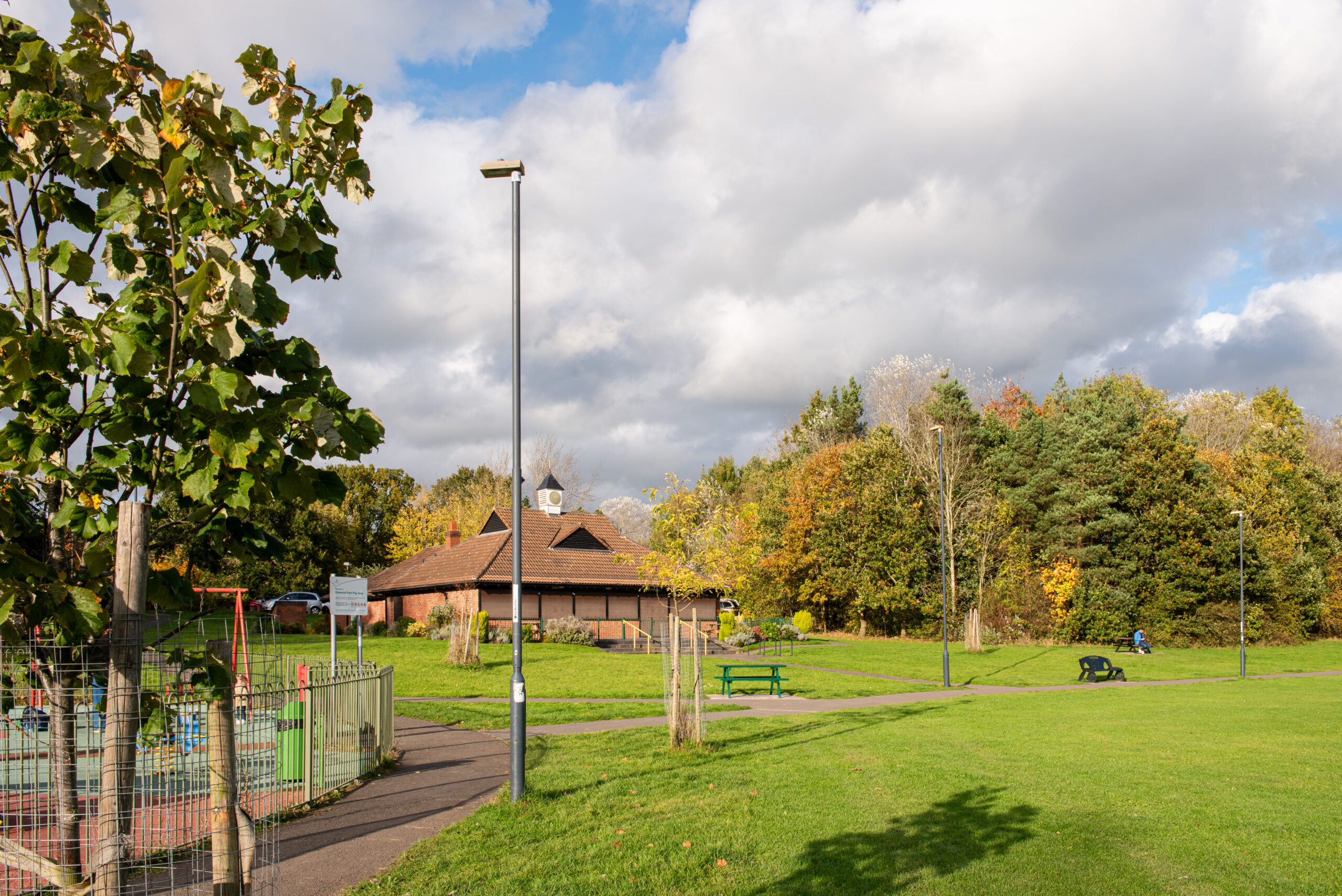
Oakwood Park is a public park located in the Oakwood suburb of Derby in the East Midlands. This park of almost 28 acres serves as a green space for local residents and visitors, providing recreational facilities and opportunities for outdoor activities.
It encompasses a community centre, playground and a field, which is used for annual music festivals. The safety of all users, walkers, runners and children playing in this park is of the utmost importance. At the same time, however, it is a haven for birds, squirrels, foxes and other wildlife to habitat in the area.
Derby City Council, along with Balfour Beatty (the appointed contractor), reviewed this park and chose to conduct an onsite lighting trial with the aim of reducing the amount of embodied carbon, achieving high levels of circularity and reducing energy consumption.
Solution
An initial meeting took place between TRT Lighting and Derby City Council, where the council team outlined their ambitions relating to achieving its net zero targets.
They wanted to improve the footpath lighting in the park but, crucially, in a way that also benefited the environment and reduced operating and energy costs.
A site survey was carried out to better understand the location as well as the users, purposes and layout of Oakwood Park.
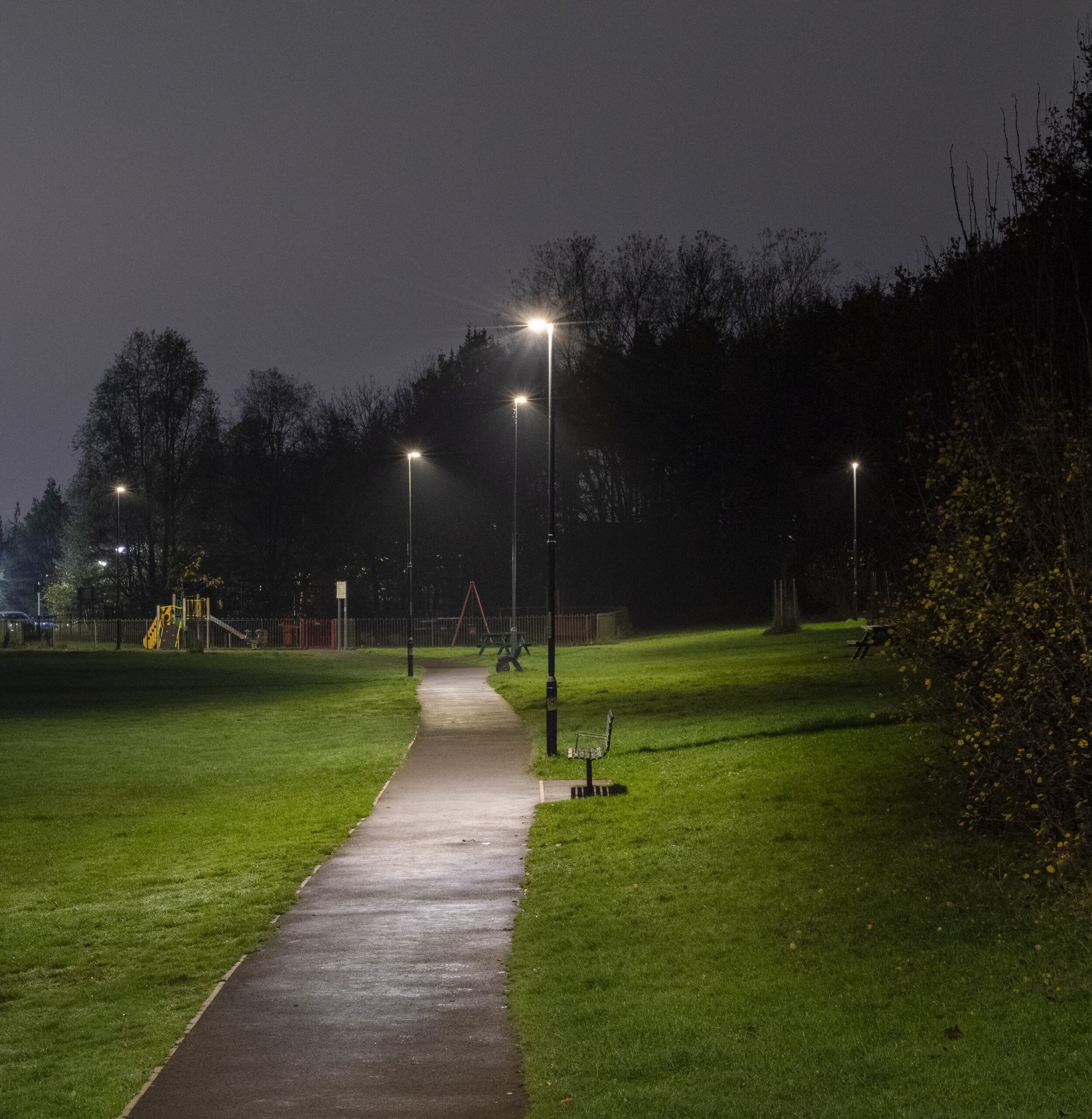
This emphasised the importance of maintaining good lighting levels, particularly around the children’s play area, while ensuring zero upward light to help protect wildlife and preserve the night sky.
Balfour Beatty Living Places produced a lighting design, which required uniformity at a column spacing of 38m. It was deemed that a lantern with a warm-white colour temperature of 3000K or below could meet the necessary light levels while also reducing the amount of blue light emitted.
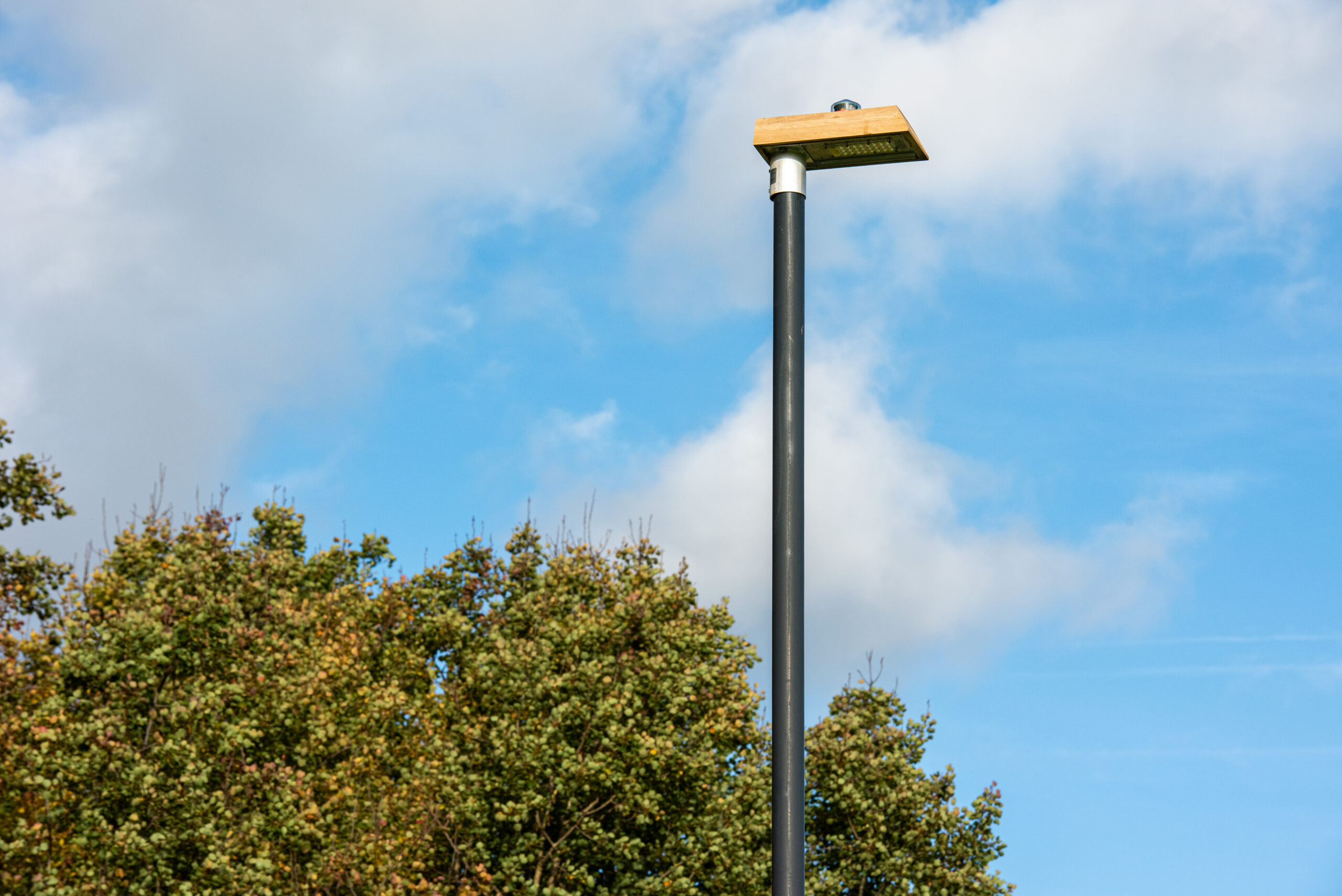
With its DarkSky International accreditation, the British-made ‘Oaken’ lantern was deemed the ideal solution, as it met all the relevant criteria as outlined above.
Aesthetically, the lantern’s European oak housing, which is sustainably harvested from a PEFC regulated forest, would complement the natural environment. Moreover, a further benefit was that, as the park is of course exposed to the vagaries of wet British weather, its angular design aids the dispersion of rainwater and limits water absorption, so enhancing its longevity.
Finally, the fact the lantern is made of recycled materials, such as low carbon copper cable and a 100% PIR polycarbonate gear enclosure, significantly reduced its ‘Cradle to Gate’ embodied carbon by 97%*, achieving an industry-leading ‘excellent’ TM66 product circularity score of 3.1.
At the end-of-life the wood taken from the Oaken is graded, and based on its grade, it is recycled to produce either biofuel or fibreboard (the recycling process is unaffected by the wood adhesive). The gear tray and mounting post, manufactured from over 90% recycled aluminium, are highly recyclable and their unpainted finish simplifies this process.
In sum, the conversations had been as much about embodied carbon, energy consumption, sustainability, circularity, ecology, and TM66 scores as they were about lighting amenity, wayfinding and function, even though these were of course also vital parts of the process.
By focusing on embodied carbon and energy consumption, the new lighting in Oakwood Park has become a paradigm of sustainable urban lighting, successfully balancing the need to maintain light levels, enhance public safety and amenity, while at the same time protecting wildlife and reduce energy and carbon.
*Compared to aluminium cast alloy body baseline.