

Illuminated Handrail Lighting
Designing safe, integrated low-level lighting solutions
Illuminated handrail lighting is one of those solutions that looks simple on the surface but only works well when the detail is right.
At its best, it doesn’t feel like “lighting” at all. It simply helps people move through a space confidently after dark. The handrail becomes a guide, clearly defining edges, changes in level and direction of travel, without adding clutter or visual noise.
From bridges and waterfront walkways to staircases and ramps, handrail lighting offers a practical way to provide continuous, low-level illumination. But because the lighting is integrated into the structure itself, the early design decisions matter more than people often expect.
Start with the application
The first conversation TRT typically has when a handrail lighting enquiry comes in is simple: what are we actually trying to light? And, is handrail lighting the right solution for this space?
In some environments, column or bollard lighting may make more sense. In others, particularly stairways, bridges, and ramps, handrail lighting gives clearer guidance and a more cohesive visual result.
The key is understanding the task.
- Are we lighting steps where edge definition and depth perception are critical?
- A ramp that needs consistent, accessible illumination?
- A bridge where glare control is just as important as route visibility?
- A riverside path where spill light must be tightly controlled?
Being clear about the purpose early on avoids both over-lighting and under-lighting. It also helps determine the right output, optics and control approach from the outset.
Think about who you’re lighting for
It’s easy to focus on lux levels. In reality, handrail lighting is about people.
Different users experience a space differently. A pedestrian walking alone at night reads the route in a different way to a cyclist moving through at speed. A wheelchair user or someone with limited mobility relies heavily on consistent visual cues. Visitors unfamiliar with the area need instant clarity.
In public realm settings especially, a well-lit handrail often improves perceived safety as much as it improves physical visibility. Clear, balanced light helps people feel comfortable without the harshness that can come from poorly controlled low-level sources.
Rain, reflections from water, glare from traffic and seasonal changes all influence how light is experienced. Considering these factors during design leads to schemes that feel right in use, not just correct on paper.
Integrating lighting into the structure
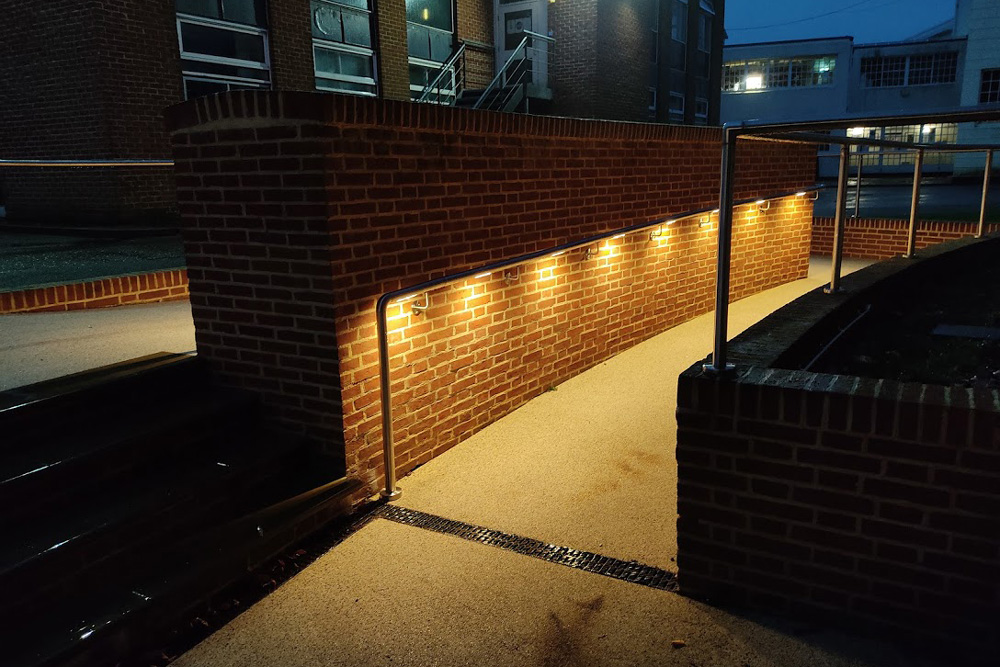
Unlike adding a luminaire to a wall or column, handrail lighting becomes part of the construction.
That means structural design, material choice, finishes and fixing methods all influence the final lighting performance. It also means early coordination between client, contractor and manufacturer is essential.
Handrail lighting is commonly integrated into:
- New balustrade systems
- Bridge parapets
- Stair balustrades
- Wall-mounted handrails
- Existing infrastructure being refurbished
Electrical planning is just as important. Longer runs need voltage drop to be considered at design stage to maintain consistent light output from one end to the other. Driver access, cable routing and safe maintenance access all need to be thought through before fabrication begins.
Where emergency lighting is required, integrating it within the handrail can simplify the overall scheme and remove the need for additional fittings overhead. But it has to be designed in properly from the start.
Optical control and glare
Low-level lighting leaves little room for error. Visible LED points, excessive brightness or poor uniformity are immediately noticeable.
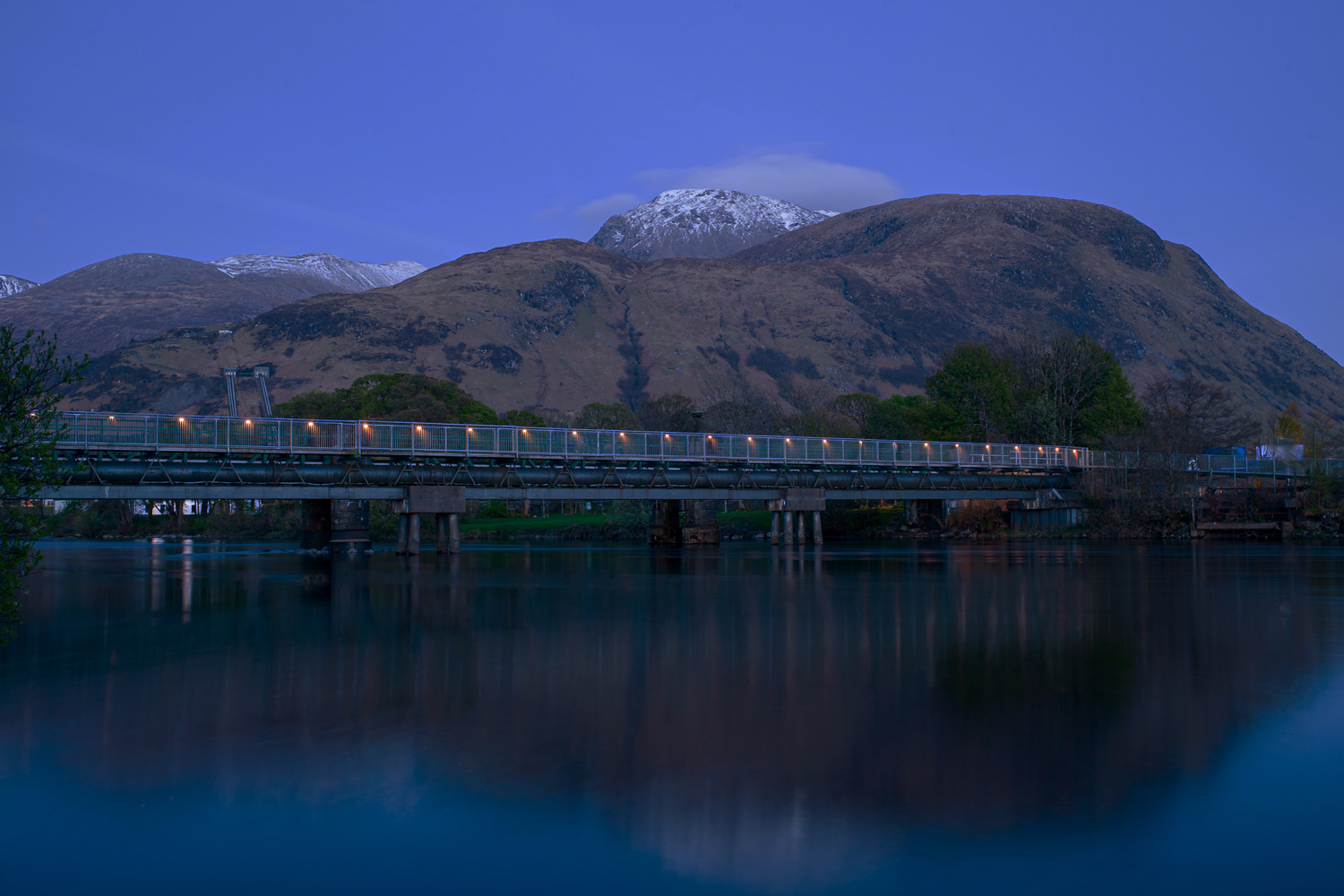
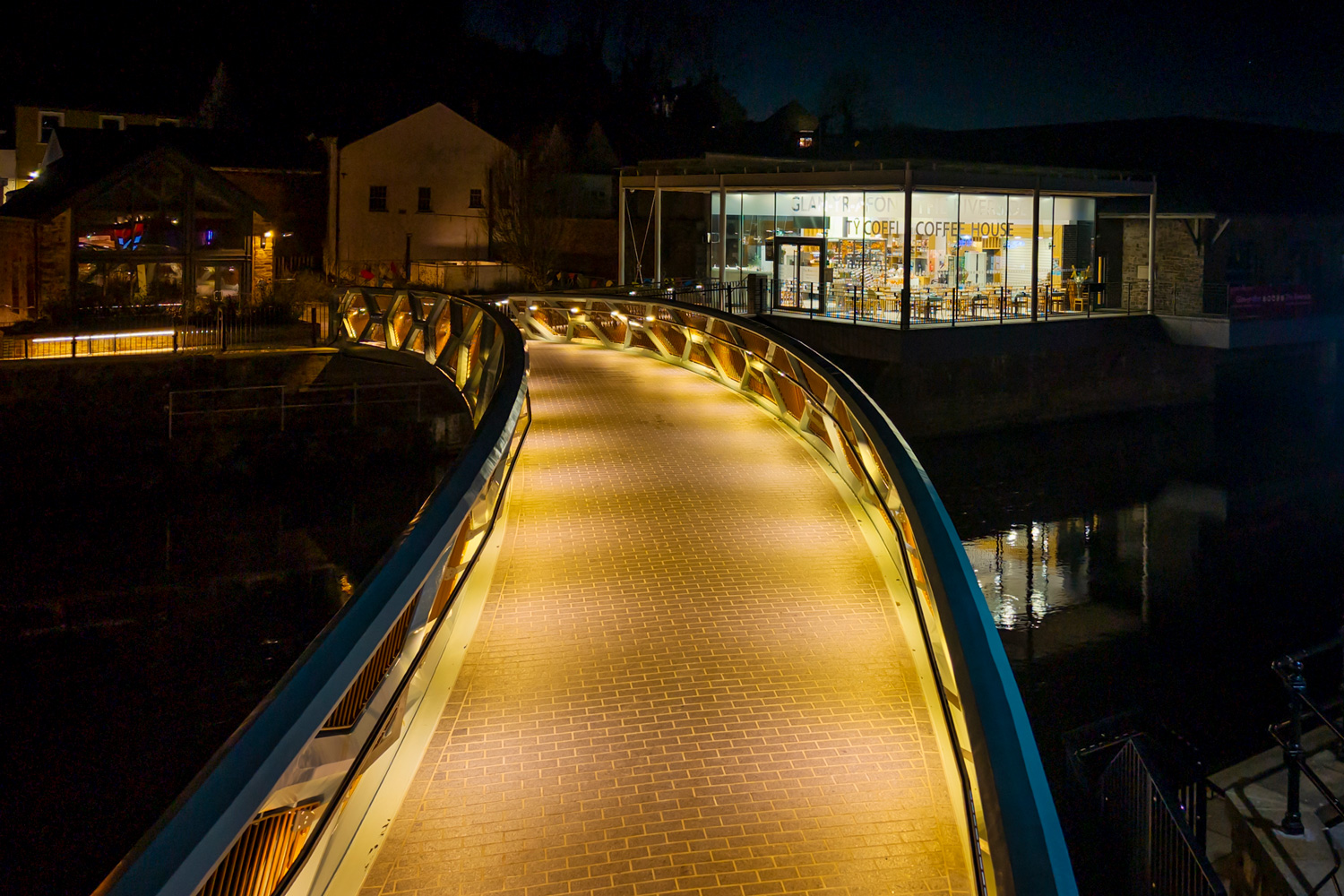
Using lensed LED modules helps direct light onto the walking surface while limiting spill into surrounding areas. This is particularly important on bridges and waterfront schemes, where glare can cause discomfort for pedestrians and wildlife using the space.
Colour temperature also plays a role. Warmer options such as 2700K or 3000K are often preferred in pedestrian environments, creating a more comfortable feel and reducing environmental impact. In interior settings, 4000K or RGB options may be appropriate, but the application should always lead the decision.
Designs should also be assessed against relevant standards including BS 5489-1, BS 8300 and ILP guidance on obtrusive light, alongside electrical and emergency requirements where applicable.
Image: Behind The Lens Media
Controls and performance
In many public realm schemes, handrail lighting benefits from simple control strategies.
A dimmed background level with presence detection can reduce energy use while ensuring full illumination when the route is in use. Presence detection can be delivered through TRT’s Lumi-LinQ control system, while DALI-based interfaces allow seamless integration with third-party lighting control platforms where required.
The aim is to keep the lighting subtle when the space is quiet, while maintaining clarity and safety when needed.
Manufacturing matters
Illuminated handrails are rarely true off-the-shelf products. Most schemes require some level of bespoke fabrication to suit the geometry of the structure and the way it will be installed.
Altura
TRT Lighting’s Altura illuminated handrail system is manufactured to project requirements rather than built from standardised kit parts. This allows longer continuous sections with fewer joints, improving both appearance and reliability.
Available in Midi, Maxi and Anti-Climb configurations, Altura offers:
- Bespoke manufactured sections
- Custom brackets and fixing solutions
- Lensed LED modules for controlled distribution
- Colour temperatures of PC Amber, 2200K, 2700K, 3000K and 4000K
- RGB options where feature lighting is required
- Remote PIR capability
- 3-hour emergency operation
Designing for access and replaceability helps reduce long-term maintenance costs and supports a more sustainable approach over the life of the installation.
In practice: Sheffield Hallam University
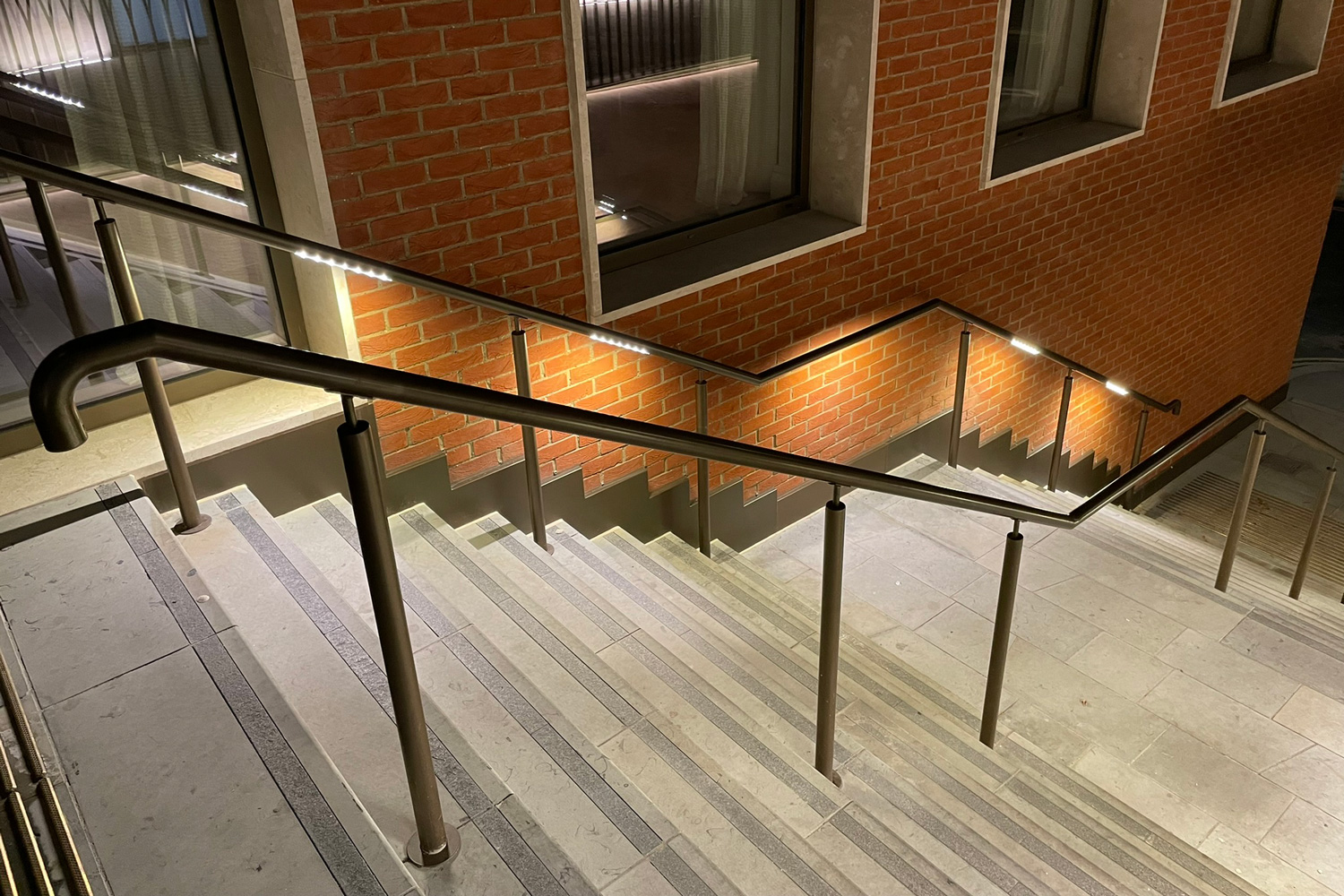
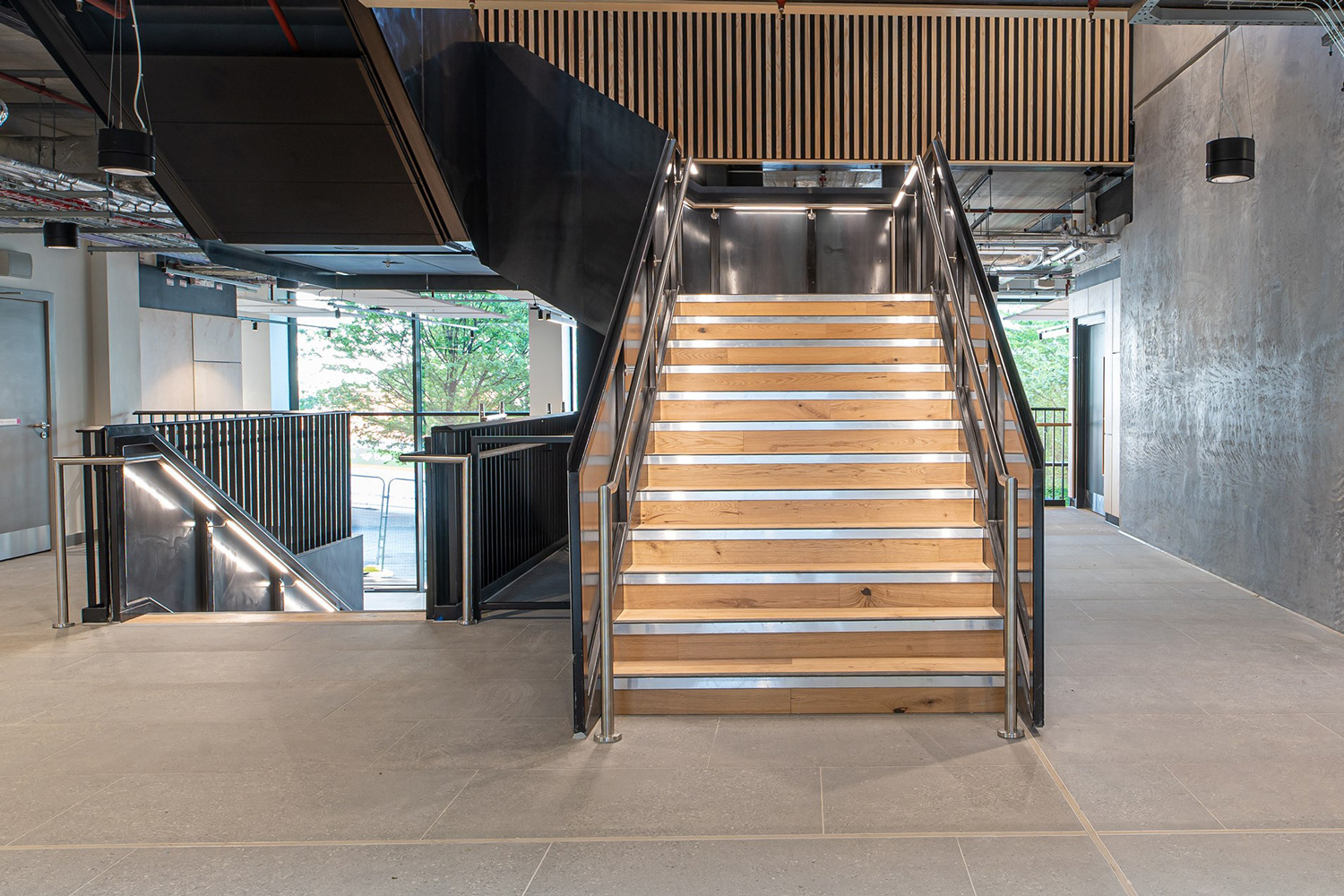
Illuminated handrail lighting was recently installed across three new academic buildings at Sheffield Hallam University, where more than 250 metres of handrail were integrated within interior staircases.
The requirement was continuous illumination combined with emergency provision, without adding luminaires above the staircases. By integrating the lighting into the handrail, the scheme achieved consistent performance while simplifying maintenance access.
It’s a good example of how, when considered early, handrail lighting can solve multiple design challenges at once.
Lighting that works with the structure
Illuminated handrail lighting is not about adding light to a space. It is about using an element that already needs to exist (handrail) and allowing it to do so much more.
When structural engineering, electrical planning and lighting design are aligned from the outset, the result is clean, efficient and easier to maintain over the long term.
As more projects look to reduce visual clutter and integrate infrastructure more intelligently, handrail lighting continues to prove its value as a practical and adaptable exterior lighting solution.
For early-stage discussions or project-specific advice, contact the TRT Lighting design team at info@trtlighting.co.uk or call +44 (0)1527 521162.